Friday, November 26, 2021


03/11/2021 Methods

1.      1. Description of the class

In this class we differentiated some concepts such as learning, aquisition, mother tongue, second and forign language, competence and performance. Then, some partners presented a video showing one type of methodology.

2.     2. Describe what you learn in the class

The professor explained us what is the meaning of the following words:

  •   Learning refers to be conscious of the grammar and rules about a language
  •  Aquisition refers to the “natural” of picking up a language.
  •    Mother Tongue refers to the first language that you learnt when you were a child.
  • Second language refers to the necessity of acquiring a language of another language (For example: If you live in Mallorca, your second language will be “mallorquí”)
  •  Foreign language refers to the language that you learn in school (For example: English)
  •  Competence refers to the capacity you´ve go.
  • Performance refers to the action.
On the other hand, we learnt the aplication in class of several methods: Grammar Translation Method, CLIL, Suggestopedia, Audiolingual and Direct Method.

3.     3.  Opinion about the class

This class was useful to learn about some methods, so I think that if you wacth a video in which shows a particular method you can understand more easily the main idea of each one because it allows you to visualize the action that takes place in the classroom.

                                                  04/11/2021 More methods

1.    1. Description of the class

We continued in the class with the videos´ presentations of different types of methods.

2.  2. Describe what you learn in the class

We learnt the following methods:

  • TPR (Total Physical Response) is based on the movements
  • Silent way is a strange method which consists of the teacher silently presenting the class so that the students can speak according to the teacher´s instructions.
  • Communicated Language Teaching is based on activities that promote communication.
  • Content based, Task Based and Participatory Approaches is for higher levels (for example: 6th of Primary Education) and the students have to do different tasks in class ( for instance: join or complete exercises)
  •  Learning Strategy Training is based on students helping each other to improve their learning process.

3.  3. Opinion about the class

Like the previous one, this was useful to learn about some methods.


28/10/2021 LOMLOE

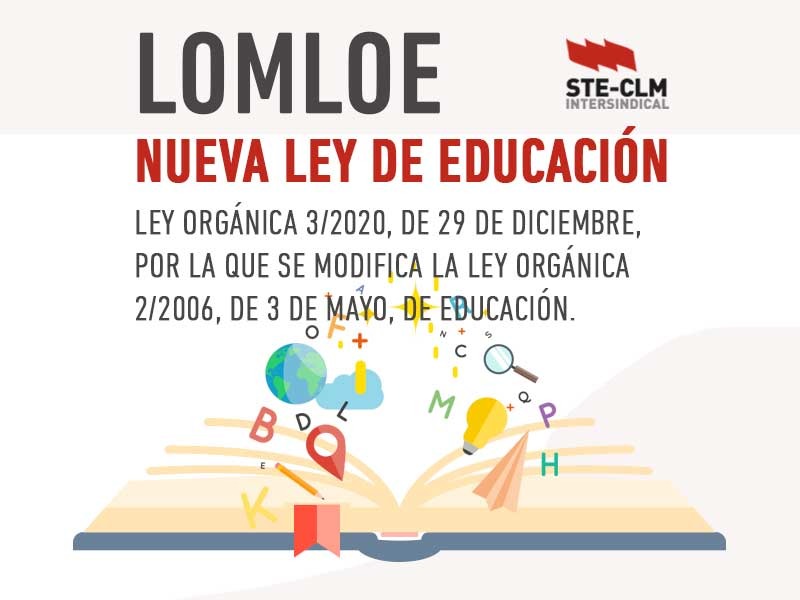
Picture. LOMLOE


(LOMLOE: Hoy se aprueba la nueva Ley de Educación, s.f.)


1. Description of the class

In this class we saw a draft of the Lomloe, based on competencies, what students should know how to do. In this law, specific competences (communication, multilingualism and multiculturalism) are evaluated by different cycles, so that learning situations are encouraged, thus promoting global tasks that relate the different areas (workshops)

2.     2. Describe what you learn in the class

I have learned with the Lomloe a new approach of evaluating the knowledge of students since, it gives more importance to the development of Knowledge, skills and attitudes in order to train more competent people in the future. Therefore, this approach focuses more on valuing Know-how to do than memorization.

3.     3.   Opinion about the class

I have found the class interesting, as we have learned a Little more about the new curriculum. In this way, I consider that before making changes in the educational system, teachers recieve sufficient training to be able to address it, carrying out a more efficient education.

Bibliography

LOMLOE: Hoy se aprueba la nueva Ley de Educación. (s.f.). Obtenido de STE-CLM INTERSINDICAL: https://ste-clm.com/lomloe-manana-se-aprueba-la-nueva-ley-de-educacion/


27/10/2021 The Education´s evolution

1. Description of the class

In class we saw a video that showed the education of the 70s, which was not compulsory and did not generate opportunities for everyone. Then, we learned the evolution of education, which was improved so that all people had the opportunity to study.

2.    2. Describe what you learn in the class

I have learned that education in the 70s was based on experimentation, so it was not as bad as I expected. Students were taught from practices that they could visualize and put in context with what they learned.

3    3. Opinion about the class

This class has been useful to me to learn about the changes that have been taken place in the education system over the years. From everythyng seen in class, I have made it clear that teaching can be improved as long as modifications are made to it, without changing drastically. In addition, the education system must encourage contextualized learning in everyday life situations to train more competent students. Therefore, experimentation should be valued more so that it learns from what is manipulated and not from memorization.

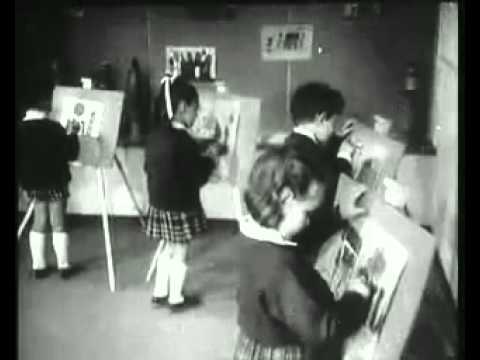
                 Education in 1970                                      


(Ley General de Educación de 1970, 2013)        

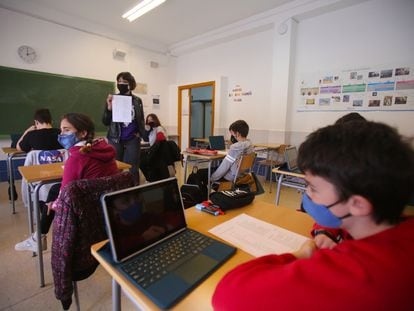
Education nowadays

   (¿Cómo logra España mantener los colegios abiertos mientras todos a su alrededor los cierran?, 2021)

Bibliography

¿Cómo logra España mantener los colegios abiertos mientras todos a su alrededor los cierran? (2 de abril de 2021). Obtenido de EL PAÍS: https://elpais.com/educacion/2021-04-02/espana-esta-entre-los-paises-que-menos-clases-ha-perdido-por-la-pandemia.html

(29 de enero de 2013). Obtenido de Ley General de Educación de 1970: https://www.youtube.com/watch?v=mq8j4U2j23c


Friday, November 12, 2021


14/10/2021 Our assessment. Titanic Proyect

1.       1. Description of the class

In this class we worked in groups in order to design an specific assessment with different points of view, so we used the topic record keeping and reporting with the Titanic pack material.

2.     2.  Describe what you learn in the class

In this activity I have known to use different types of evaluations with the aim of motivating students in theirs learning process. For that reason, we designed a teacher evaluation that is based on observation, a coevaluation in which the classmates have to evaluate others by filling in some questions, and a selfevaluation in which the student must value his/her own work.

3.      3.  Opinion about the class

I consider that this work is very useful for a future teacher because this allow us to use more evaluation techniques with the aim of being innovative and moving away from traditional methods.

20/10/2021 

1.      1. Description of the class

We exposed our evaluation designed, so we explained three diffrent types of assessment: an analytic rubric, coevaluation and a self-evaluation.

2.      2. Describe what you learn in the class

We leraned that there are different ways to evaluate students in order to motivate surpassing themselves and promote their learning process.

3.      3. Opinion about the class

I consider that it was an intesresting class because we could learn more ideas about how assess children, for example using a Kahoot, classdojo, drawings or rubrics.

21/10/2021 

1.       1. Description of the class

Our partners exposed their activities and evaluations designed. They approached the student assessment system from different perspectives and some made use of applications, such as Kahoot and Google surveys,  in order to evaluate students in the most original way.

2.       2. Describe what you learn in the class

I learned that it is important to know the level of the class and the different types of evaluations to be able to adapt it to the students in the most appropriate way. For example, it is required to know that it is evaluated on an observation scale, in a rubric, how to be able to approach self-evaluation and co-evaluation, in a practical way for the classroom.

3.       3. Opinion about the class

I believe that seeing the work of others is a good method to learn from mistakes and welcome a clearer view of the different types of evaluations, knowing their advantages and disadvantages.

Our Proyect. Group. The Blondes

Activity designedstudents have to record their speaking activity in groups of four. Then, they will have to answer the questions below the pictures.


Course for this activity. 5th Primary Education

Teacher Rubric

Description.  Teacher has to evaluate students according to the following descriptors.


4.Perfect

3. Very good

2. Good

1.Needs work

Contents

The student treats the content appropriately. He/She is creative when it comes to addressing the subject. In addition, it provides what it expresses with great fluidity.

The student treats the content appropriately. He/She expresses to his or her classmates quite well, bringing fluidity to the content.

The student treats the content appropriately.

Content is expressed and addressed well; although it is necessary to work a little more fluency.

The student does not adequately address the content by understanding the issues. You need to work on fluency.

Vocabulary

The student uses appropriate vocabulary. He/She is really creative, since the employment of a very rich and varied vocabulary. Connectors are addressed, bringing fluidity to the topic.

The student uses appropriate vocabulary. He/She employs a variety of vocabulary related to the topic. Connectors are addressed, bringing fluidity to the topic.

The student uses appropriate vocabulary. He/She employs enough vocabulary related to the topic. Connectors are addressed, although  it is necessary to work a little more fluency.

The student  does not use appropriate vocabulary. He/She employs vocabulary that is not related to the topic. The student hardly uses connectors so it hinders fluency.

Full sentences

The sentences are rich in content, with a perfect placement of the grammatical structures. He/she uses idioms in a very natural way

The sentences are rich in content, with a perfect placement of the grammatical structures.

The sentences are constructed properly, although it is necessary to use more adverbs and adjectives that provide richness in the speaking.

The sentences are not constructed properly and the structure that students use is poor.

Speak clearly (Pronunciation)

The student pronounces properly, correctly differentiating the plurals from the singulars and the past from the present.

The student pronounces quite properly. He or She tries to differentiate plurals from singulars and the past from the present.

The student quite pronounces. He or She sometimes tries to differentiate plurals from singulars and the past from the present.

The student does not pronounce properly. He or She does not differentiate plurals from singulars and the past from the present.

Time limit

The student speaks at all times with great fluency around 3 min (the maximum time set).

The student speaks at all times with great fluency around 2 or 1,5 min.

The student speaks around 1 min.

The student speaks less than 1 min.

Observations


Coevaluation

Description. When all students finish the speaking, each one of them has to evaluate the rest of the group through a file with different questions. Here is an example of that file. 


Self-evaluation

DescriptionThe students have to paint with a specific color the different parts of the rubric. 

  • Red: If they are not identified with the item. 

  • Yellow: If they are not totally identified with the item. 

  • Green: If they are totally identified with the item. 


13/10/2021 Evaluation tools

1.      1. Description of the class

We learned about some evaluation tools like observation techniques (record, control list, observation scale, diary), student homework review, using class notebook analysis or analysis of productions, specific tests in which you can choose between composition and objective tests, interviews or conferencing, self-evaluation and coevaluation.

On the other hand, the teacher explained us some information about European Language Portfolio, a document in which people who are learning a particular language can register and reflect on their language learning and intercultuaral experiences. The ELP contains three different elements: a language passpot, language biography and a dossier.

2.     2. Describe what you learn in the class

I learned some interesting tools tha I can use in class in order to increase children motivation such as diary and observation scales, so if I use them, I will improve the learning process because this instruments can measure the level of each student in a continuos way. In addition, I learned how useful the document ELP is, since we can place ourselves at the level of acquisition of a certain language, so this allow us what skills we have and the others we should have to improve.

3.      3.  Opinion about the class

I consider that teacher should give us more information about the document ELP as it is a useful tool to know about a certain language because the process of acquiring a language would be more reliable if we looked at some guidelines to know how and what we have to do to improve the language level.

Link here: https://www.slideshare.net/paojean2000/assessment-tools-in-language-assessment

Tuesday, November 2, 2021


07/10/2021 Creation of a rubric

1.       1. Description of the class

We disscussed about the disadvantages of exams and the idea of both approaches (formative and summative) but also the teacher introduced us how assessing young learners in order to achieve an evidence of the children´s progress with the purpose of increasing motivation and promoting future work. In addition, It is important to consider what we have to evaluate in class, keeping in mind attitudes, skills development, behaviour and social skills, creating a positive atmosphere. Moreover, we learnt a great variety of instruments which can be included in assessment schools like diaries, questionnaire or peer assesment. Finally, we looked at some online pages like http://rubistar.4teachers.org/index.php?screen=NewRubric&section_id=8#06 in which you  create different rubrics or scales, so you can collect the evidence of learning that provides scaled levels of achievement with rating scales.

2.       2. Describe what you learn in the class

In this class I learned new methods to evaluate students so that they do not feel pigeonholed by a simple mark. This is why, we need to include new types of evaluation with the aim of improving the learning process. For that reason we can encorage students using peer assessment, diaries or giving them some tips about what they need to improve.

3.       3. Opinion about the class

I found interesting this session because many times teachers use the same evaluation system every year. However, the teacher may also consider other types of assessment in order to improve student´s individuality. In this way, the student who is evaluated will not give as much importance in the exams because the chid will be valued throughout the entire school period.

Watch the following video: What is a rubric?


06/10/2021 How assessment should be focused

1.       1. Description of the class

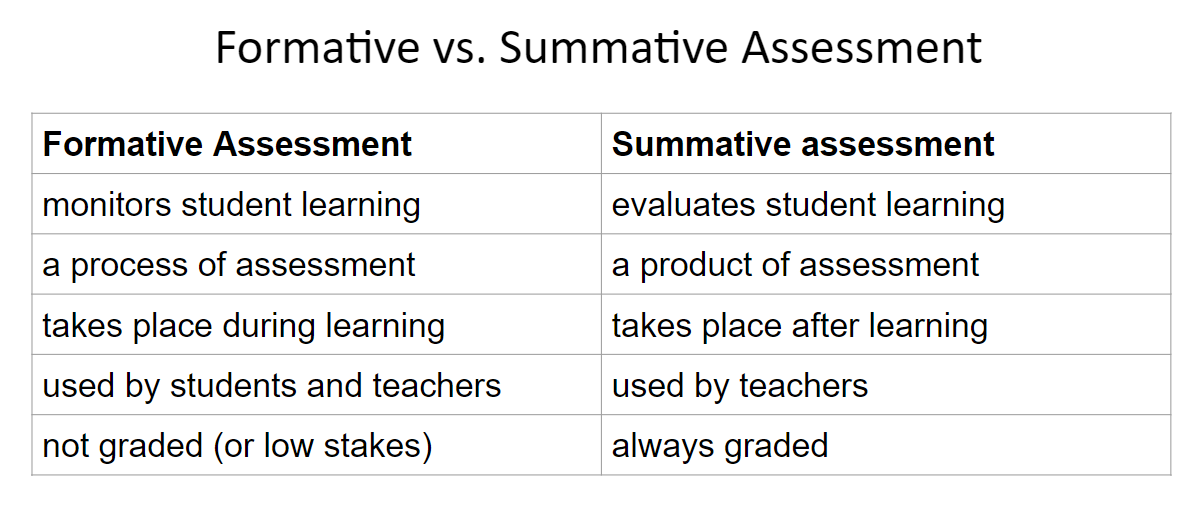
We reviewed formative assesment that is an integral part of the learning and teaching process. In it, there are two elements: feedback and active engagement. On the other hand, the teacher explained us that assessment for learning should focus on how pupils learn, be recognised as central to classroom practice, be regarded as a key profesional skill for teacher in which he or she observes learning, be sensitive and constructive because it has an emotional impact,  try to motivate students, receive constructive guidance and recognise the full range of achievements of all leraners. Summative approach collects all the skills and attitudes and is more introspective and colud be a complement of formative approach.

2.      2. Describe what you learn in the class

The main goal of formative assessment is to promote student´s feedback in a continuous way so, the teacher uses some descriptors (quality) in order to improve the learning process. Summative approach focus on evaluation so is based on a quantitive system. However, both types of assessment could be complementary.

3.       3.Opinion about the class

I think that in this class we have learned about formmative and summative approach but some concepts of both I could nor understand as I found it confusing to understand the difference between these two methods of evaluation. Maybe I did not take the basic ideas of each of them.

(Evaluación formativa, s.f.)

Bibliography

Evaluación formativa. (s.f.). Obtenido de HIGHLINE COLLEGE: https://ltc.highline.edu/teaching-excellence/assessing/formative-assessment/


29/09/2021 Assessment, evaluation and formative assessment


(Crear una evaluación formativa para el uso diario y obtener, s.f.)


1.       1. Description of the class

The teacher recalled the differences between assessment and evaluation, but also she emphasized on promoting formative assesment, that consists in a way of form and train students and the one which do not  focus in the memoration skills of students because they need a new kind of teaching in which their learning would be a process. Then, we had to discuss in pairs about assessment (types, subject and objective assessmente and the responsability of it). Then, we had to explain how evaluate creative in students, for example making a proyect or writing a story, so the most common intrument to control the evaluation is a rubric with different descriptors. Finally, the teacher showed us the European Language Portfolio for Primary Education and some proyects that she has done like virtual exchanges.

2.       2. Describe what you learn in the class

In this class I learned that a good teacher should be objective when it comes to valuing a student´s work, since there are times when teachers usually evaluate subjectively, classifying students unfairly. For this reason, in the process of evaluation, the teacher must have more teachers in the evaluation, the student, the relatives and the authorities.

On the other hand, the teacher showed us a Portfolio, an instrument that motivate student in the process of learning english.

3.     3.   Opinion about the class

This sesion was very useful to learn more about the types of evaluation and the importance of the rubric to be more precise in the evaluation process. A different form to include more global activities with checklist.

CLICK on this link for more information: https://reader.elsevier.com/reader/sd/pii/S0883035520300082?token=19A994130D45A3BC1BDA018947ED8F05770B1E730D89732407890024405D75A95E9C747020CD881F52413B1D2ADF1C72&originRegion=eu-west-1&originCreation=20211102173308

Bibliography

Crear una evaluación formativa para el uso diario y obtener. (s.f.). Obtenido de SlideToDoc: https://slidetodoc.com/creating-formative-assessment-for-daily-use-and-getting/

Schildkamp, K., van der Kleij, F. M., Heitink, M., Kippers, W., & Veldkamp, B. (2020). Formative assessment: A systematic review of critical teacher prerequisites for classroom practice. International Journal of Educational Research.


  01/12/2021  1.         1.  Description of the class Several groups of students carried out several activities, addressint two differen...